
Currently Empty: $0.00
0 Comments
Reflections on character, habits, and the work of becoming a better person. Drawn from classical philosophy, biography, and time-tested wisdom.
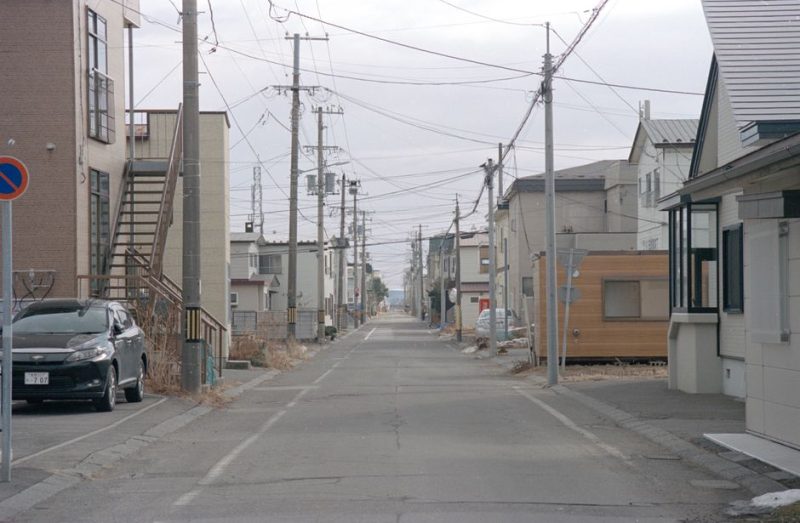
Something Happened to the Street
Think about the street you grew up on — or the one you live on now. Do you know your neighbors’ names? Not just a wave-and-nod acquaintance, but their actual names? Do you know who on your block is going through a hard time, or who just had something worth celebrating? If the answer is mostly no, you’re not alone. And you’re not a bad person. But something real has been lost, and it’s worth understanding what.
Community on the neighborhood level used to be ordinary. It wasn’t a program or an initiative. It was just what happened when people shared a street long enough. Today it feels rare — almost fragile. Before we can talk about how to rebuild it, we need to understand how it quietly fell apart in the first place.
We Stopped Being Outside
Fifty years ago, the front porch was a social institution. People sat on them. They watched the street. They talked to whoever walked by. That kind of informal, daily contact built relationships without anyone trying to build them. It just happened through proximity and time.
Today, most of us walk from the car to the front door without pausing. We work indoors, entertain ourselves indoors, and socialize — to the extent we do — through screens. The backyard replaced the front porch for a lot of families, and while that’s fine for privacy, it’s not great for community. You can’t meet your neighbor through a privacy fence.
This isn’t a complaint about modern comfort. It’s just an observation: when people stopped being visible to each other in small, everyday ways, the invisible threads that connect a neighborhood started to fray. You can’t maintain a relationship you never have a chance to start.
We Optimized for Convenience, and Paid for It in Connection
There was a time when the local hardware store, the diner, the barbershop, and the corner market served a function beyond commerce. They were places where you ran into people from your street. You couldn’t buy nails without a ten-minute conversation. You couldn’t get a haircut without knowing what was going on in the neighborhood. These “third places” — spaces that weren’t home and weren’t work — were the social infrastructure of daily life.
We traded most of them for big-box stores, online ordering, and drive-throughs. The transaction got faster and cheaper. But we stopped bumping into each other. And those accidental, unplanned interactions were doing more community-building work than anyone realized at the time.
Sociologist Ray Oldenburg wrote extensively about the role of third places in community health, arguing that when informal gathering spots disappear, social life fragments. We didn’t notice the cost because each individual convenience felt like a good trade. But the cumulative effect was isolation dressed up as efficiency.
Busyness Became a Badge
There’s also something harder to pin down, but worth naming. Somewhere along the way, being busy became a mark of status. If you weren’t rushed, you weren’t important. If you had time to sit and talk, maybe you weren’t working hard enough.
That mindset quietly killed a lot of community. Knowing your neighbors takes time. Showing up when someone needs help takes time. Sitting on the porch and just being present — that takes time, and it feels unproductive by the modern measure of things.
Seneca wrote that we are often tighter with our money than with our time — but time is actually the more precious thing. He meant it in a personal sense, but it applies here too. We guard our schedules fiercely and then wonder why we feel disconnected. We have more productivity and less community than any previous generation, and that’s not a coincidence.
Fear and Distrust Moved In
Something else happened too. Trust between strangers declined. Whether driven by news cycles, rising anxiety, or simple unfamiliarity with people who live differently — people started treating the unknown neighbor as a risk rather than a resource. Parents warned kids about strangers. Fences went up. Ring cameras replaced the kind of neighborhood watching that used to mean a retired man down the block knew every kid by name.
This isn’t about being naive. There are real dangers in the world and good reasons for reasonable caution. But fear, when it becomes the default setting, closes people off from the very connections that would actually make them safer and happier. Research consistently shows that people in tightly connected neighborhoods have better health outcomes, lower crime, and higher reported wellbeing. The neighbors who know each other look out for each other. Fear of the stranger, taken too far, doesn’t protect community — it prevents it.
What Can One Person Actually Do
Here’s what’s honest: one person can’t rebuild a whole neighborhood. But one person can start something. Community has always grown from individual acts, not from programs or meetings. It grows from someone deciding to make the first move — to introduce themselves, to bring something over when someone is struggling, to wave and actually stop when they wave back.
A few things that are small but real:
- Learn the names of the people immediately around you. Not just to be polite — names are the beginning of seeing someone as a person.
- Be outside more. Sit on your front step. Walk your street slowly. You can’t connect with people you never encounter.
- Bring something. Food is the oldest social currency there is. When someone moves in or goes through something hard, bring food. It’s never wrong.
- Slow down for small talk. Don’t treat a neighbor’s greeting as an interruption. Those two-minute conversations are the foundation everything else is built on.
- Show up when it counts. Funerals. New babies. Moving day. These moments matter, and showing up for them matters more than most people think.
None of this requires you to be an extrovert or to love socializing. It just requires a decision to treat the people near you as worth knowing.
The Street You Live On Is Still Yours
Community isn’t a product you can order or a feeling that just arrives. It’s built — slowly, imperfectly, through repeated small choices to show up for the people around you. The street that feels anonymous today looked different a generation ago, and it can look different again. Not because of a program. Because someone decided to start.
This week, learn one neighbor’s name you don’t know yet. That’s it. Start there.
Sources
- Oldenburg, Ray. The Great Good Place. 1989.
- Seneca. Letters from a Stoic. c. 65 AD.
Articles like this are shared by Blue Lodge Supply — offering apparel, gifts, and goods for those who value tradition, character, and craftsmanship.

