
Currently Empty: $0.00
0 Comments
Reflections on character, habits, and the work of becoming a better person. Drawn from classical philosophy, biography, and time-tested wisdom.
Two Ways to Show Up
Most fathers want to be present. That’s not the problem. The problem is that presence comes in two very different forms — and it’s easy to confuse one for the other. A father can be physically in the room, doing all the right things, and still be somewhere else entirely. And another father can be tired, imperfect, and fumbling through it — and his kids know, deep in their bones, that he is truly there.
The difference between these two fathers is the difference between playing and performing. It’s worth slowing down to understand which one you actually are — not to feel guilty, but because the gap between the two is something you can close.
What Performing Looks Like
A performing father is running a script. He shows up at the birthday party, attends the game, sits at the dinner table. He does the things a good father does. But underneath it, he’s watching himself do them. He’s aware of how he looks. He’s thinking about work, or his phone, or whether he’s doing this right. The activity is happening, but he’s not quite in it.
Performing isn’t always about ego. Sometimes it comes from anxiety — the fear of failing your kids, of not knowing how to connect, of saying the wrong thing. Sometimes it comes from exhaustion. You’re depleted and going through the motions because going through the motions is all you have left. That’s understandable. But it’s worth naming it honestly, because your kids are perceptive in ways that will surprise you.
Children don’t analyze their parents the way adults do. They feel them. A ten-year-old can’t tell you why Dad’s version of playing catch felt hollow. He just knows it did. A five-year-old can’t articulate that Mom or Dad was distracted during storytime. She just loses interest faster and wanders off. The feedback is subtle, but it’s real.
What Playing Looks Like
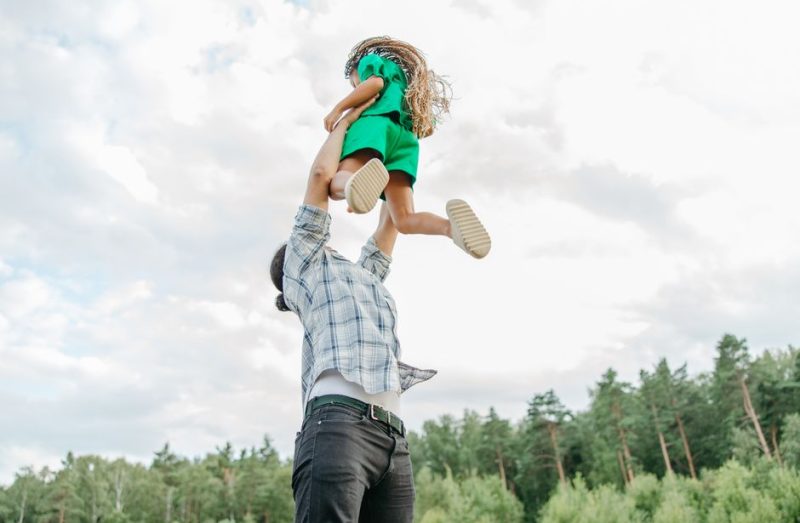
A playing father has let go of the audience — including the one in his own head. He’s not thinking about whether he looks like a good dad. He’s not tracking the time. He’s in the thing itself. He’s building the block tower and genuinely curious whether it falls. He’s in the backyard kicking the ball and actually laughing when he trips.
This kind of presence isn’t about performing joy. It’s about dropping your agenda long enough to enter someone else’s world. Your child’s world. That world is smaller than yours in geography but richer in imagination. When you step into it without conditions, something shifts. The child opens up. The conversation gets easier. The connection you’ve been working toward stops being work.
Real play also tolerates imperfection. A playing father doesn’t need the activity to go well. He doesn’t need his kid to win, to perform, to make him proud in this particular moment. He’s there to be with his child, not to manage outcomes. That freedom — both his and the child’s — is what makes the time feel safe and real.
Why We Default to Performing
Most of us were not raised to simply be. We were raised to do. To produce. To achieve. A man’s worth, in the culture most of us grew up in, was measured by output. So when we enter the unstructured, unproductive space of genuine play, something in us gets uncomfortable. We start managing. Improving. Teaching. Coaching. We turn the moment into a project.
There’s nothing wrong with teaching your kids things. That’s part of the job. But if every moment of togetherness becomes a lesson, you stop being a companion and become a supervisor. Kids need both — but they need the companion more than most fathers realize. The lessons they’ll carry longest aren’t the ones you sat them down to teach. They’re the ones absorbed through hours of easy, unguarded time together.
Marcus Aurelius wrote in his Meditations about the importance of doing things for their own sake — not for recognition, not for the appearance of virtue, but because the thing itself matters. That principle applies here. Being present with your child doesn’t need to produce anything. It doesn’t need to be documented or remembered. It just needs to happen.
The Long Game
The research on this is consistent. Children who feel genuinely connected to their fathers — not just provided for or supervised, but truly known — show stronger emotional resilience, higher self-esteem, and better outcomes across almost every measure that matters. This isn’t about being a perfect father. It’s about being a real one.
The good news is that real connection doesn’t require extraordinary effort. It requires ordinary moments handled with full attention. Twenty minutes of genuine play — where you are actually there — does more than two hours of distracted togetherness. Quality is not a cliché here. It’s a real and measurable thing.
Think about your own childhood. If you were lucky enough to have a father who was present, you probably don’t remember the big events first. You remember a specific smell, a tone of voice, a phrase he said. You remember the texture of ordinary time. That texture is built one small, present moment at a time.
One Small Shift
You don’t need to overhaul your life to move from performing to playing. You need one daily decision: when you are with your child, be with your child. Put the phone in another room. Let the to-do list wait. Let yourself be a little ridiculous. Follow their lead instead of setting the agenda.
If you catch yourself watching yourself parent instead of actually parenting, that awareness is already a step. Name it quietly. Come back. It takes practice — real, ongoing practice. You’ll get distracted again. That’s fine. The habit is returning, not perfection.
Your child doesn’t need a flawless father. He or she needs a father who shows up, laughs genuinely, loses the game without drama, and is willing to be fully in the room. That father is already in you. Stop performing, and let him out.
Sources
- Aurelius, Marcus. Meditations. 161–180 AD.
- Lamb, Michael E. The Role of the Father in Child Development. 2010, Wiley.
Articles like this are shared by Blue Lodge Supply — offering apparel, gifts, and goods for those who value tradition, character, and craftsmanship.

